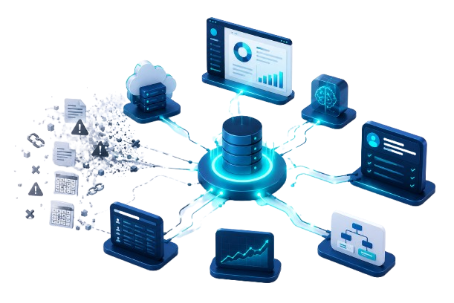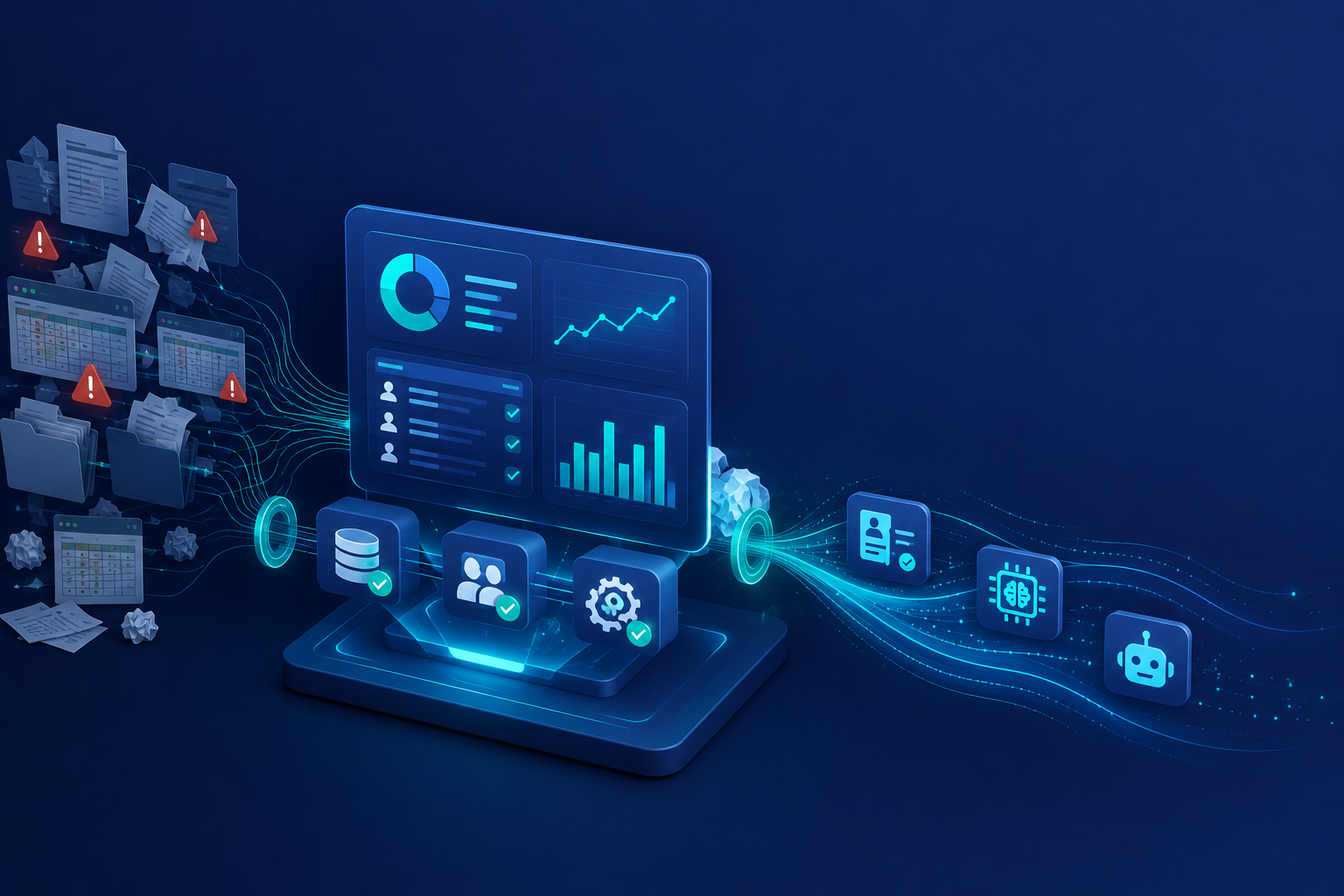
Data hygiene is the foundation of every successful digital business. Every company wants better automation, smarter AI, and faster decision-making. However, none of these technologies can deliver reliable results if they’re built on poor-quality data.
Duplicate records, missing customer information, inconsistent databases, and outdated files create hidden costs that many businesses don’t notice until productivity starts to decline. As a result, teams’ waste valuable time, reports become less accurate, and customer experiences suffer.
Keeping your business data clean, accurate, and consistent improves data quality, reduces manual work, and helps every department make better decisions.
Data hygiene is the ongoing process of keeping business data accurate, complete, consistent, and up to date. It involves maintaining data accuracy, improving data integrity, removing outdated information, and ensuring every team works with reliable data.
Although many people use the terms interchangeably, data hygiene and data cleansing are not the same. Data cleansing is a one-time activity that fixes existing errors, whereas data hygiene is a continuous process that prevents those problems from returning.
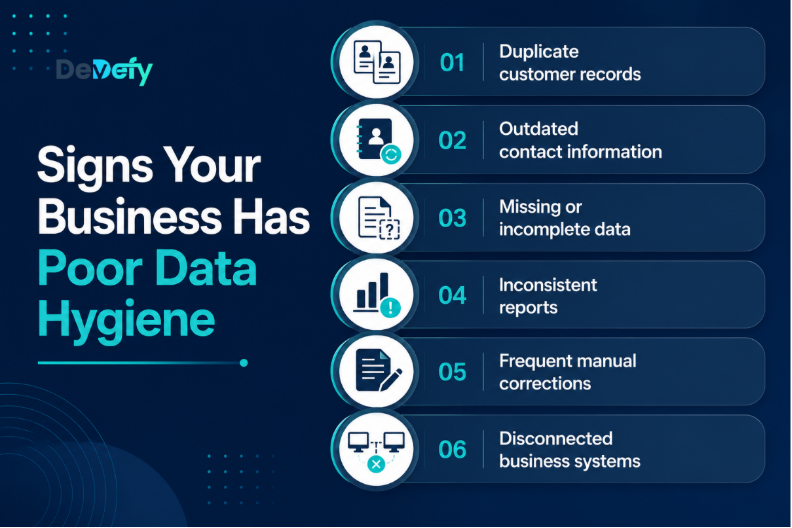
One of the biggest hidden costs of poor data hygiene is duplicate work.
When employees work with outdated spreadsheets or multiple customer profiles, they waste valuable time searching for the correct information. In many cases, the same record is updated several times across different systems, creating confusion and increasing the risk of manual errors.
Maintaining strong CRM data hygiene helps eliminate duplicate records and simplifies record management. As a result, every department works from a single, reliable source of truth.
Customers expect businesses to know who they are.
Receiving duplicate emails, incorrect invoices, or repeated calls from different representatives creates frustration and weakens customer trust. Although these mistakes may seem small, they often influence whether customers choose to continue doing business with you.
Good customer data management ensures every interaction is based on accurate information. Sales, marketing, and support teams can access the same customer records, leading to faster responses and more personalized communication.
AI has transformed the way businesses operate. However, even the smartest AI solution cannot produce reliable results without clean data.
If your databases contain outdated customer information or inconsistent records, AI tools may generate inaccurate recommendations or automate the wrong actions.
Likewise, workflow automation depends on consistent information to trigger the right processes at the right time.
By improving AI readiness, maintaining clean customer data, and supporting predictive analytics, businesses allow AI and automation to deliver meaningful results instead of creating additional work.
Every important business decision depends on reliable information.
Whether you’re reviewing sales performance, forecasting revenue, or measuring customer retention, inaccurate reports can lead to poor strategic decisions.
Strong data consistency improves reporting accuracy, strengthens business intelligence, and provides more dependable insights across departments. Instead of questioning conflicting reports, leadership teams can focus on identifying opportunities and solving business challenges.
Many businesses assume they need new software to improve efficiency. In reality, better data management often delivers a greater return.
Poor data creates unnecessary administrative work. Employees spend hours correcting records, transferring information between disconnected systems, and resolving avoidable customer issues. Over time, these repetitive tasks increase operating costs and reduce operational efficiency.
By following data hygiene best practices, improving information management, and standardizing business processes, companies reduce waste while increasing productivity.
Technology can help your business move faster, but only when it’s built on accurate, reliable information.
Poor data hygiene creates hidden costs that affect every part of your organization, from customer experience and reporting to automation and decision-making. Fortunately, improving your data doesn’t always require a major transformation. Small, consistent improvements can significantly increase productivity, reduce operational costs, and help every system perform more effectively.
As your business continues to grow, clean data becomes more than a best practice, it becomes a competitive advantage. If you’re planning to invest in AI, automate business processes, or modernize your technology, start with your data. It’s one of the smartest investments you can make.








Discover how the right technology and the right data foundation can save your business time, reduce costs, and support sustainable growth.