How to Prevent Technical Debt Before It Slows Your Startup
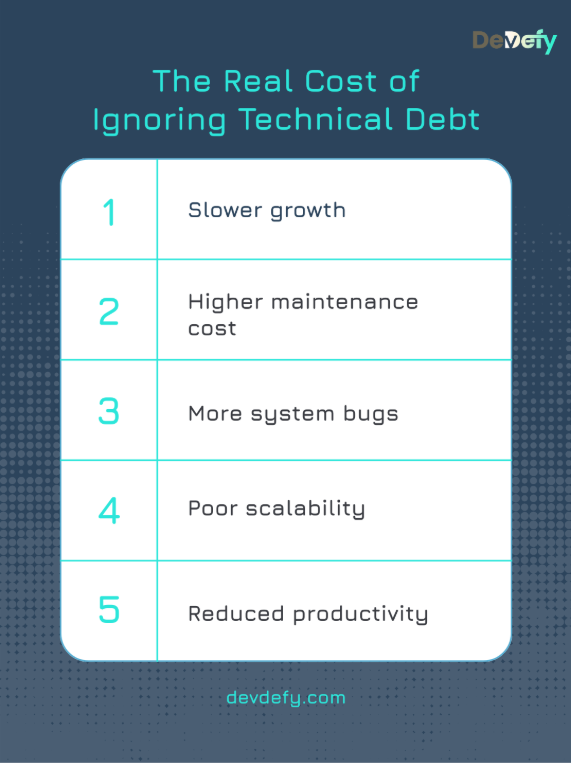
Technical debt can quietly become one of the biggest obstacles to startup growth. In simple terms, technical debt refers to the future cost of choosing quick, short-term solutions over more sustainable software development practices. In the rush to launch an MVP, attract investors, and get products into customers’ hands, many startups prioritize speed over long-term code quality. While that approach may deliver short-term wins, it often creates hidden challenges that emerge later as bugs, performance issues, security vulnerabilities, and rising software maintenance costs.
The numbers are hard to ignore. McKinsey estimates that technical debt can account for 20% to 40% of the value of a company’s technology estate, highlighting how significantly it can impact long-term software efficiency, scalability, and overall business value.
7 Strategies to Prevent Technical Debt
1. Design a Scalable Software Architecture from Day One
An MVP helps startups validate ideas faster and reduce risk. However, building without considering future growth can lead to expensive rewrites and scalability challenges later in the products lifecycle.
Instead, create a software architecture that can evolve alongside your business. Modular components, best practice design patterning, well-defined APIs, and scalable infrastructure make it easier to add features without disrupting existing functionality.
You do not need enterprise-level complexity from the beginning. However, you should establish a foundation that supports future growth.
2. Establish Coding Standards to Improve Code Quality
As development teams expand, inconsistent coding practices can quickly increase code complexity.
By creating coding standards early, startups ensure that developers follow consistent conventions and best practices. Consequently, the codebase becomes easier to maintain, review, and improve.
Standardized code helps reduce onboarding time and improves collaboration across development teams.
3. Use Code Reviews to Catch Problems Early
Code reviews serve as one of the most effective defenses against technical debt.
Rather than allowing code to move directly into production, reviews help identify architectural flaws, security concerns, performance issues, and maintainability risks before they become expensive problems.
Without automated testing, software development becomes increasingly risky as applications grow.
Developers often become hesitant to modify existing functionality because they cannot confidently predict how changes will affect the system. Over time, this fear creates a fragile codebase.
Automated testing provides a safety net. Unit tests, integration tests, and end-to-end tests allow teams to release updates faster while reducing defects and unexpected failures.
As a result, startups can maintain development velocity without sacrificing software quality.
5. Schedule Regular Refactoring Sessions
Many startups postpone refactoring until “later.” Unfortunately, later often arrives when technical debt has already become overwhelming.
Instead, allocate time during each sprint to improve existing code. Small, consistent improvements prevent debt from accumulating and help maintain long-term code quality.
Additionally, regular refactoring improves maintainability and supports future software scalability.
6. Document Technical Decisions and Processes
Poor documentation creates a hidden form of technical debt that many startups underestimate.
When critical knowledge exists only in developers’ heads, teams become vulnerable to turnover and communication gaps. Consequently, valuable development time is spent rediscovering information rather than building new features.
Documenting architecture decisions, workflows, dependencies, and deployment processes preserves institutional knowledge and improves collaboration.
7. Monitor Technical Debt with Development Metrics
You cannot manage what you cannot measure.
Successful startups track metrics such as code complexity, test coverage, bug frequency, deployment success rates, and technical backlog size. These indicators help identify areas where technical debt may be accumulating.
Furthermore, regular technical audits provide visibility into risks before they affect customer experiences or business growth.
Takeaway
Preventing technical debt is not about slowing down development. Instead, it is about building smarter systems that support sustainable growth. Startups that invest in scalable software architecture, code quality, automated testing, documentation, code reviews, and continuous refactoring are far better positioned to scale efficiently.
Frequently Asked Questions (FAQs):
What is technical debt in software development?
Technical debt is the future cost created when developers choose faster, short-term solutions instead of more sustainable approaches. Over time, these shortcuts can increase maintenance costs and reduce development efficiency.
How can startups prevent technical debt?
Startups can prevent technical debt by implementing scalable software architecture, coding standards, code reviews, automated testing, regular refactoring, documentation, and ongoing monitoring.
Is all technical debt bad?
No. Strategic technical debt can help startups launch products faster and validate ideas. However, it should be tracked and addressed before it begins affecting software quality and business performance.