AI tools can save time, reduce manual work, and help teams move faster. However, there is a point where adding another AI tool can create more problems than it solves.
This is known as AI tool sprawl. It happens when businesses keep adding AI software without a clear plan for how each tool fits into their workflows. According to Zapier’s research on AI tool sprawl, 28% of enterprises now use more than 10 different AI applications, while 70% have not moved beyond basic AI integration.
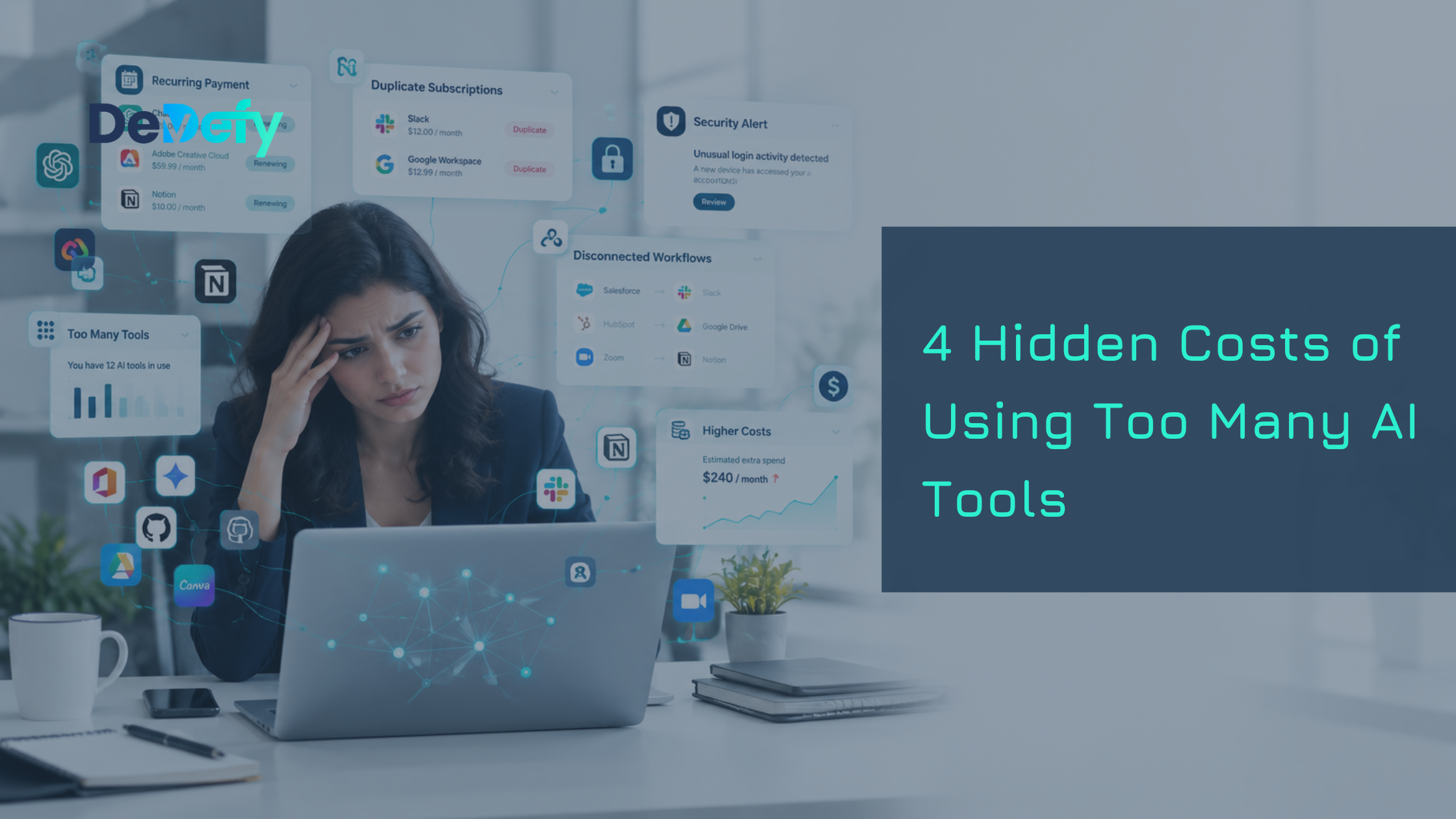
At first, every new tool may seem useful. Over time, however, businesses can face higher costs, disconnected systems, security risks, and lower productivity.
1. Duplicate AI Software Costs
One of the easiest problems to miss is paying for tools that do almost the same thing.
Different teams may purchase different AI tools for similar tasks. Marketing might use one writing assistant, while sales uses another. Meanwhile, another department may pay for a platform that already includes similar features.
The result is duplicate AI subscriptions and unnecessary software costs.
This often happens because teams choose tools independently. Each purchase looks small, but several monthly subscriptions can become a significant expense over time.
2. Productivity Loss from Context Switching
AI is supposed to make work easier. Yet using too many AI tools can interrupt the way employees work.
Imagine an employee researching a topic in one application, switching to another to write, and then opening a third platform to analyze the results. Each switch requires attention to move from one task and interface to another.
This is known as context switching.
Frequent switching can interrupt concentration and make it harder for employees to stay focused, especially when they repeat the same process throughout the day.
The issue is not that any one tool is necessarily inefficient. The problem is the constant need to move between different tools while completing a single task.
3. Inconsistent AI Output and Quality Costs
Using different AI tools can create another problem: inconsistent results.
AI platforms do not always respond to the same instructions in the same way. They may use different writing styles, structures, levels of detail, or approaches to a task.
This can become a problem when multiple teams use different platforms for customer communication, content, reports, or other business materials.
For example, one AI tool may create customer messages in a formal tone while another produces a more casual style. Over time, this can make a company’s communication feel inconsistent.
The same issue can appear in analysis and recommendations. Different platforms may provide different answers to similar questions, making it harder to maintain a consistent standard across the business.
Without clear guidelines, the quality of AI-generated work can vary from one team or task to another.
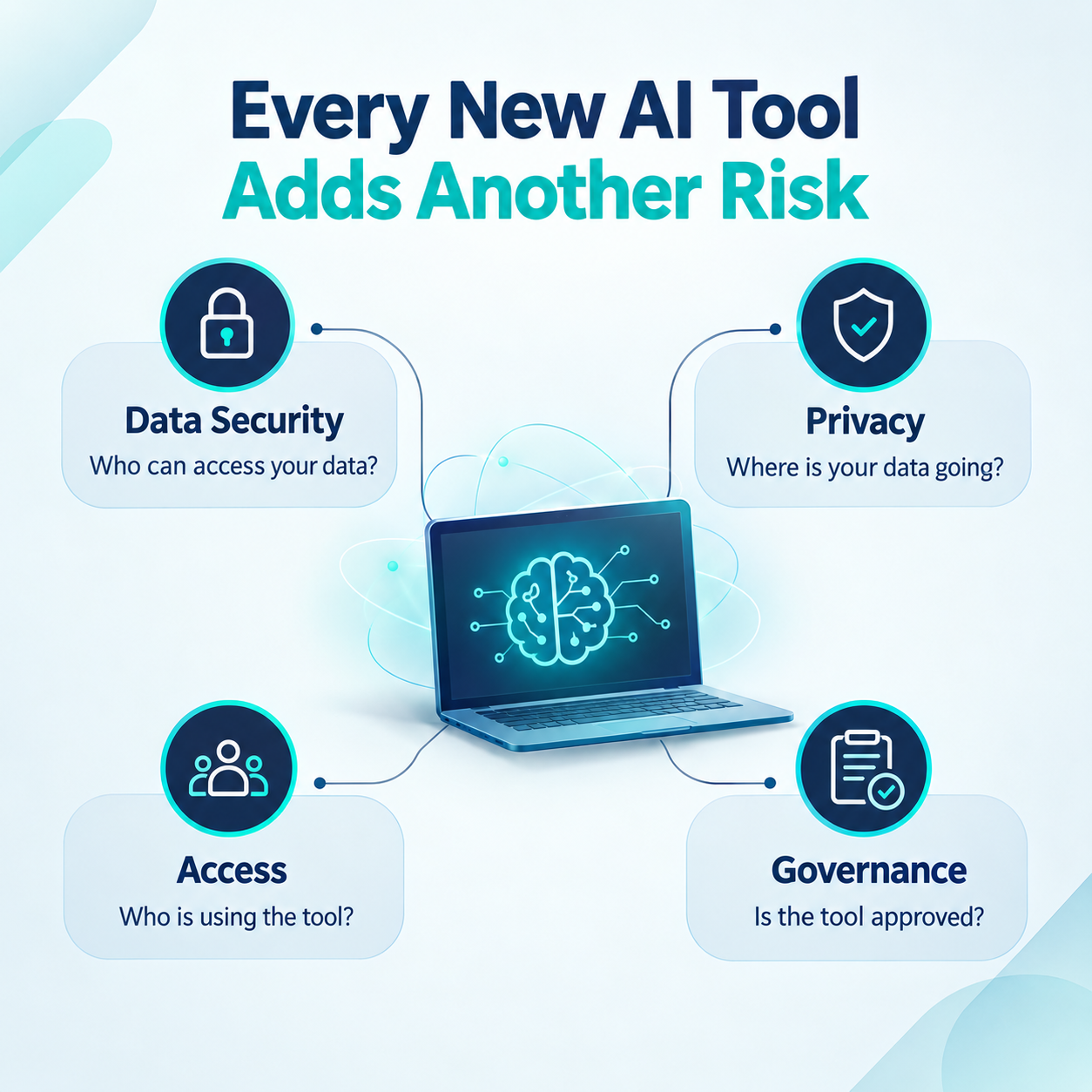
4. Security, Privacy, and Governance Risks
Every new AI application can introduce another place where business information is processed.
Employees may enter customer information, internal documents, financial data, or other sensitive information into tools without fully understanding how that data is handled.
This becomes even more difficult when employees use AI tools without approval. This practice is often called Shadow AI.
Therefore, businesses need clear AI governance. They should know which tools employees are using, what data those tools can access, and who is responsible for managing them.
How Can Businesses Reduce AI Tool Costs?
The answer is not to stop using AI.
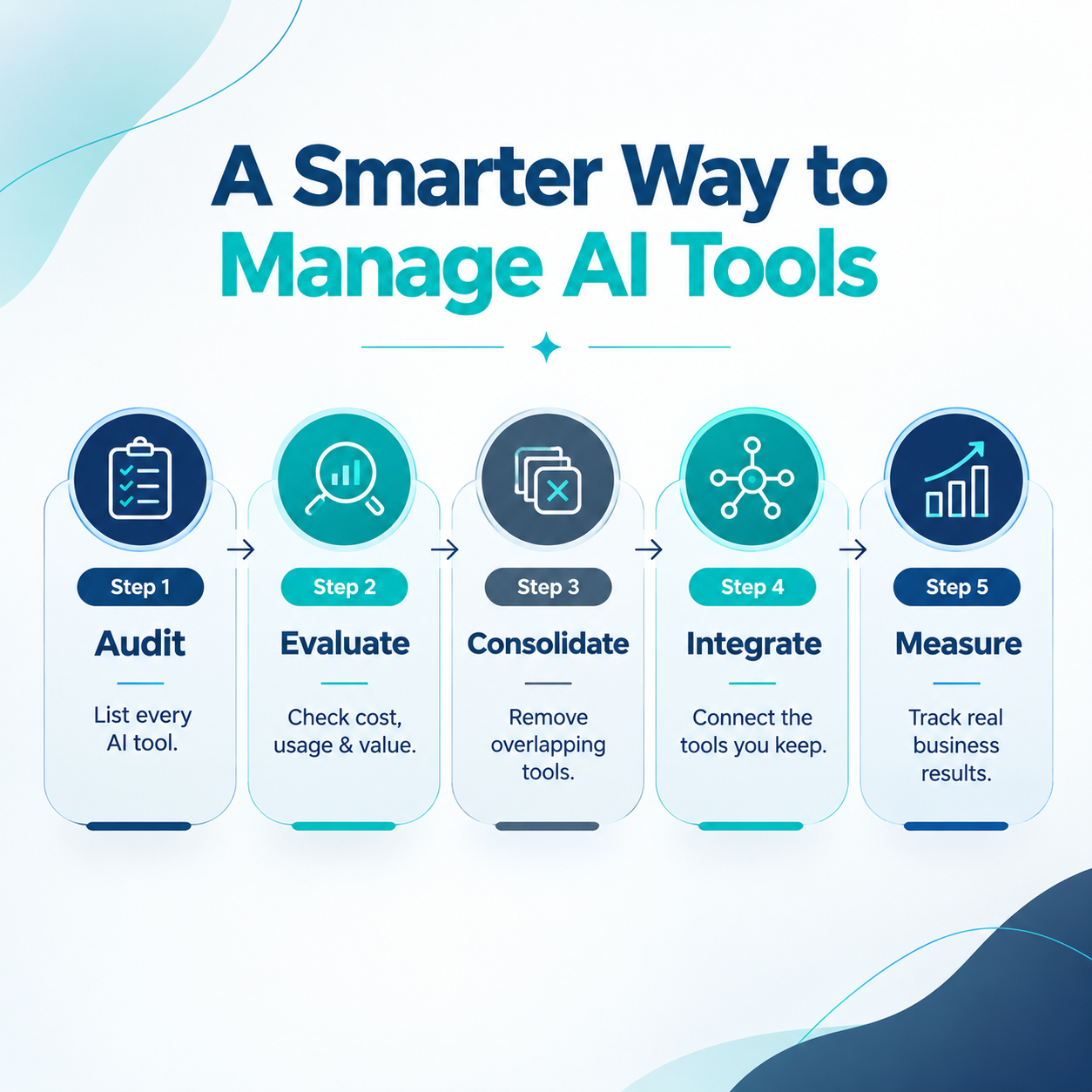
Instead, businesses should build a clear AI strategy around their actual needs.
Start with an inventory of every AI tool currently being used. Then review its cost, purpose, users, data access, and business results.
Next, look for overlapping AI software. If two platforms solve the same problem, consider whether one can be removed or replaced.
Finally, focus on integration. The goal should be to create connected workflows rather than a collection of isolated applications.
Frequently Asked Questions (FAQs):
What are the hidden costs of using too many AI tools?
Beyond subscription fees, businesses may face integration costs, training expenses, productivity loss, security risks, and ongoing management work.
What is AI tool sprawl?
AI tool sprawl is the uncontrolled growth of AI applications across a business, often with overlapping features, disconnected workflows, and limited central oversight.
How do too many AI tools affect productivity?
Too many platforms can increase context switching, create fragmented workflows, and force employees to move information between systems manually.